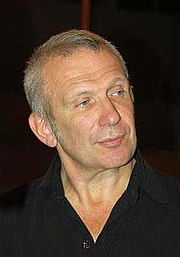
Sartre JeanPaul Vedic birth chart profile
DKSCORE
Scorpio Lagna

Sartre JeanPaul

Remembering (Apr 15, 1980)

June 21, 1905 · Paris, Ile-de-France
13views
Moon Sign
Aquarius
Sun Sign
Gemini
Ascendant
Scorpio
Nakshatra
Dhanishta
Birth Star
Other FamousNobel prizePoliticsWritersTeacherMilitaryHumanities+Social SciencesLeadership Roles
Biography

Who is Sartre JeanPaul?

French writer, existentialist philosopher, novelist, essayist and playwright. His philosophy of existentialism stated that the world had no meaning for mankind, but instead proposed that the individual is responsible for his or her own purpose. After 1939, Sartre served as the leader of the French intelligensia. He was awarded the Nobel Prize for Literature 1964 but declined on political grounds. An only child of a distinguished family, he was a handsome, active baby, pampered by his mother after his fathers death when he was just a year old. When his hair was long it was curly, but when cut, people realized how ugly he was. His full height was less than 5 ft. With a vindictive and angry personality, he was self-confident, knowing he was smarter than other children. Feeling a sense of power and control while writing, in October 1914 he wrote a short story about a French private who captures the Kaiser. Growing close to his mother he rebelled when she re-married April 1917. In 1920 he was sent to boarding school in Paris. With an excellent mind but lacking discipline, he raced from topic to topic, never refining a thought, substituting eloquence for any depth of knowledge. His personal habits were abominable. In August 1924 Sartre placed seventh on entrance exams for Ecole Normale Superieure, a distinguished philosophy campus. In 1928 he placed last, fiftieth, in his exit exam, placing first on a re-exam in 1929. He was in the military for 18 months beginning in 1929 and took a teaching position thereafter, with a hiatus for study in Berlin in 1933. Sartres novel "Nausea" was published in 1938. He was conscripted at the start of WW II and captured 6/21/1940. Escaping in March 1941, he joined the resistance movement. One of his most famous essays, "Being and Nothingness" was published 1943. By 1945 Sartre was famous, rejecting God and external values, touting existentialism as the philosophy to study. He became co-editor of the magazine "Les Temps Modernes." His politics moved to the left in the late 1950s. Sartre accepted a doctorate from Jerusalem University 11/07/1976. Sartres life-long companion was Simone de Beauvoir who offered emotional and professional support in their open relationship, begun in 1929. They were lovers and associates but never married, each having other lovers. Simone became his editor and co-writer with no credit. On 1/25/1965 Sartre began adoption proceedings for one of his mistresses, not allowing de Beauvoir any control over his writings. In death, their ashes were buried next to one another at Montparnasse Cemetery. At age four years he suffered influenza causing glaucoma in his right eye and the loss of some sight. In his later years, eventually he completely lost sight in his right eye. Requiring earplugs and a blindfold to sleep at night, today he might be recognized as hyperactive. He experimented with mescaline February 1935 and suffered hallucinations for the next year. All during his life he was a heavy drinker, smoking two packs of cigarettes a day, and he took amphetamines and sedatives. While in a coma, he died of pulmonary congestion on 4/15/1980 9:00 PM in a Paris hospital. Link to Wikipedia biography
Latest Info

Latest Updates

Update at: Mar 13, 2026

Jean-Paul Sartre

Public profile for the philosopher and writer born on June 21, 1905, in Paris. This summary reflects verifiable, public information about his life, major works, and legacy.

Biographical overview

  • Born: June 21, 1905, Paris, France (Wednesday)
  • Died: April 15, 1980, Paris, France
  • Fields: Philosophy, literature, existentialism, phenomenology
  • Education: École Normale Supérieure; agrégation in philosophy (1929)
  • Key relationships: Lifelong partnership with Simone de Beauvoir; collaboration and debate with other French intellectuals

Notable works

  • Nausea (La Nausée) — 1938
  • Being and Nothingness (L''Être et le Néant) — 1943
  • No Exit (Huis Clos) — 1944
  • Existentialism Is a Humanism — 1946 (public lecture)
  • The Words (Les Mots) — 1964

Philosophical contributions

Central ideas include existentialism, the primacy of freedom and responsibility, authenticity, and the notion that existence precedes essence. Sartre explored how individuals construct meaning through choices and how perception by others (the Look) shapes self-understanding. His work bridged philosophy and literature, influencing political thought, theater, and critical theory.

Public life and legacy

  • Influence: A leading figure of 20th‑century existentialism and continental philosophy; key interlocutor with Simone de Beauvoir and other contemporary thinkers
  • Political stance: Early association with leftist circles; prominent public intellectual in postwar France
  • Nobel Prize: Declined the Nobel Prize in Literature in 1964
  • Legacy: His writings continue to be studied across philosophy, literature, film, and social theory; ongoing scholarly editions and archives preserve his work

News, media, and scholarly context

As Sartre passed away in 1980, there are no current news updates about him. Contemporary coverage consists of scholarly articles, archival exhibitions, and educational programs that revisit his ideas and influence. Look to university presses, philosophy journals, and museum collections for recent scholarship and exhibitions related to his life and works.

Social media and public profiles

There are no official social media accounts for Jean-Paul Sartre. Any contemporary accounts claiming to represent him are not official. For authoritative material, rely on established academic centers, museums, and university repositories that publish Sartre’s writings and contextual analyses.

Which Raj Yogas are in Sartre JeanPaul's birth chart?

5 FOUND

Sartre JeanPaul's chart shows 3 Raj Yogas and 2 challenging combinations, including Gaja Kesari Yoga, Sasa Yoga, Budhaditya Yoga-Weak.

Planetary Combinations

What do Sartre JeanPaul's numerology numbers say?

Sartre JeanPaul's core numbers are Birth 3, Life Path 6, Destiny 11, Soul Urge 1, Personality 1, Kabbalah Number 8.

Birth
3

Unlock Birth Number 3 in Vedic astrology: explore personality traits, strengths, challenges, career potential, love compatibility, and life guidance via numerology.

Life Path
6

Chaldean Life Path 6 is Venus-led—care, harmony, and responsibility. It indicates fulfillment through relationships, service, beauty, and home balance.

Destiny
11

Chaldean Destiny 11 indicates inspired expression and intuitive leadership. It supports visionary guidance, teaching, and spiritual creativity when grounded.

Soul Urge
1

Chaldean Soul 1 desires independence and self-respect. It seeks inner strength, autonomy, and the freedom to lead from within.

Personality
1

Chaldean Personality 1 appears confident, direct, and independent. Others often see leadership energy and strong personal will.

Kabbalah Number
8

Kabbalah Number 8 reflects an inner spiritual code of power and mastery. It supports leadership, manifestation, and disciplined ambition.

Life Events & Planetary Transits

Key events mapped against the active Dasha and planetary transits at the time.

1929
Relationship
Begin significant relationship 1929 (Began life relationship with Beauvoir)
1938
Career
Published/ Exhibited/ Released 1938 (Nausea)
1940
Crime
Arrest 21 June 1940 (Captured by Germans)
1941
Social
Deinstitutionalized - prison, hospital March 1941 (Escaped from detention camp)
1964
Career
Prize 1964 (Nobel Prize, rejected)
1964
Career
Prize 1964 (Refused the Nobel Prize in Literature)
1976
Social
End a program of study 7 November 1976 (Earned doctorate)
1980
Death
Death by Disease 15 April 1980 (Pulmonary congestion, age 74)
◈ DKSCORE

Discover Your Own Cosmic Blueprint

Get a personalised Vedic birth chart analysis with your own DK Score — just like the profile above.

Or get the DKSCORE Customer app
Get it onGoogle Play

Join the world's fastest spiritual technology platform

Weekly astrology, in your inbox

Editor-picked articles + this week's transits, every Sunday. No spam.